Translate

Thursday, 31 December 2015

Johnny O'Keefe - Move Baby Move


Move Baby Move/You'll Never Cherish A Love So True/Ooh Poo Pah Doo (Parts 1 & 2)


Single on Leedon by Johnny O'Keefe (1935-1978), Australia's biggest star of the rock'n'roll era, known as The Wild One, The King of Rock'n'Roll or just J. O'K.

Move Baby Move was released in 1963 and shot to #1 Sydney #1 Melbourne #7 Brisbane #1 Adelaide #1 Perth. Single on Leedon by Johnny O'Keefe (1935-1978), Australia's biggest star of the rock'n'roll era, known as The Wild One, The King of Rock'n'Roll or just J. O'K. In Adelaide and Sydney, this was a double-sided hit with the  B-side, You'll Never Cherish A Love So True (Until You Lose It).


Ooh Poo Pah Doo was also on two other EPs, Six O'Clock Rock Vol. 2. 91960) and Ooh Poo Pah Doo (1964), the song was a favourite live item for JO'K, especially on his TV shows.

Wednesday, 30 December 2015

Ram Jam Big Band - 1968 - Ram Jam Big Band


Sunshine And I Feel Fine/Rainy Sunday/My Girl/I Didn't Know


 Moderately successful Australian '60s pop band which featured brass in the lineup
.
Although membership changes were frequent, the RJBB were a breeding ground for many other respected musos, the best known members being drummer Gary Young (Bobby & Laurie's Rondells,Daddy Cool, Jo Jo Jo Zep & solo artist), his long time partner in rhythm, bassist Wayne Duncan (also Rondells/DC/Black Sorrows/Gary's Rocking Emus), keyboardist Ian Clyne (The Loved Ones, Chain), original drummer Ray Evans who became a long time manager for Renee & Russell Morris among others,sax player Michael Edwards (Pink Finks/Party Machine/Gerry & The Joy Boys, as well as acclaimed jazz players like Don Wright (SCRA) & John Ellis (Kush)


They released four singles "Sunshine And I Feel Fine", a Top 10 hit in their hometown. The Temptations "My Girl" which just missed the Top 20 but sold consistently well to hang around for 3 months. A 3rd Top 30 hit soon followed in the superb soul ballad "I Can't Let Go of This Feeling", which contains one of singer/trumpeter Russell Smith's best vocals on record. Unfortunately a final single "Lost & Found" failed to connect & the band broke up after 3 years in 1969.

Purple Hearts - The Raven EP


Of Hopes & Dreams & Tombstones/You Can't Sit Down/Chicago/Tiger In Your Tank/I'm Gonna Try/Early In The Morning


The Purple Hearts were an Australian rock group, formed in Brisbane in 1964. The band consisted of lead vocalist Mick Hadley, lead guitarist Barry Lyde (known as Lobby Loyde), rhythm guitarists Paul Steffen (1964-65) and Fred Pickard (1965-66), bassist Bob Dames, and drummers Adrian 'Red' Redmond (1964–66) and Tony Cahill (1966-67).

It is notable that Brisbane, traditionally the most conservative of Australia's state capitals, has fostered some of this country's most anarchistic rock bands from The Purple Hearts to The Saints. The Purple Hearts were tough, arrogant and pioneering and Lobby Loyde is widely acknowledged as Australia’s first true rock guitar hero – busy blowing up speaker boxes before high volume and feed-back became rock staples.

Although they were part of the Sunshine Records stable (which included Australia's top male teen idol Normie Rowe) The Purple Hearts were uncompromising in their attitude toward recording. Consequently, their handful of singles are enduring artifacts of their unique style, which blended blues, R&B and prototype psychedelic rock, a style made even tougher by the regional influence mentioned earlier. Even their name, taken from the well-known slang term for a variety of amphetamine pop pills much favoured by mod subculture, was a brash and outrageous gesture.

Hadley, Dames and Pickard were, like so many of Australia’s rock stars, English migrants. Upon arrival in 1963 they joined forces with two other young R & B sympathisers – Lyde and Adrian Redmond – to form the Purple Hearts. Redmond was subsequently replaced by Tony Cahill, who was later chosen as Snowy Fleet’s replacement in The Easybeats.

Early in 1966 the group moved base to Melbourne, where they enjoyed minor chart success with "Early In The Morning". They quickly became a prominent part of the city's thriving pop scene and made several appearances on Australia's leading pop TV series The Go!! Show. A year later they exited with suave by issuing a press release stating that they had ceased to progress musically, were becoming stagnant and, therefore, had no reason to continue.


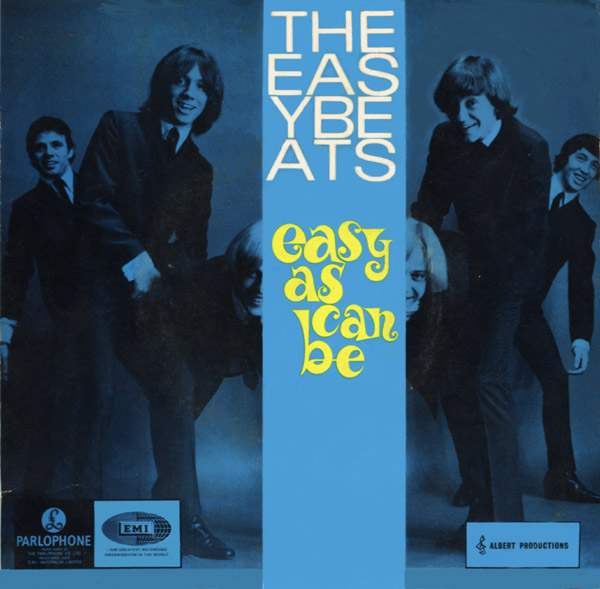
Easybeats - Easy As Can Be


Easy As Can Be/Sad and Lonely and Blue/ Me Or You/Wedding Ring


Meant to post this a few days ago as a tribute to Stevie Wright who has passed away  The ARIA hall of famer became ill on Boxing Day and was taken to Moruya Hospital on the New South Wales south coast, where he died on Sunday  night (27.12.2015) aged 68 his son Nick by his side.

RIP Stevie.

Jimmy Little - 1964 - One Road


One Road/Just A Closer Walk With Thee/Each Step Of The Way/By And By


James Oswald "Jimmy" Little, AO (1 March 1937 – 2 April 2012) was an Australian Aboriginal musician, actor and teacher from the Yorta Yorta people and was raised on the Cummeragunja Mission, New South Wales.

From 1951 he had a career as a singer-songwriter and guitarist, which spanned six decades. For many years he was the main Aboriginal star on the Australian music scene. His music was influenced by Nat King Cole and American country music artist Jim Reeves. His gospel song "Royal Telephone" (1963) sold over 75,000 copies and his most popular album, Messenger, peaked at No. 26 in 1999 on the ARIA Albums Chart.
One Road Charted at #31 on the Australian Charts.


Ray Columbus And The Invaders - Now You Shake


Now You Shake/Made You/Remember (Walking In The Sand)/Orbie Lee


Ray Columbus & the Invaders were a rock group from Christchurch, New Zealand that was active from 1964 to 1966, and fronted by leading vocalist, Ray Columbus a musician, television host and manager. Part of the new surf music craze, they were the first New Zealand band to have an international number 1 with a cover of The Senators "She's A Mod".

Influenced by the early 1960s work of Cliff Richard and The Beatles, Ray Columbus & the Invaders scored a #1 hit in Australia thus becoming the first New Zealand band to have an international #1 song[1]—and New Zealand with "She's a Mod" in 1964, a cover version of a song by The Senators. Ray Columbus and the Invaders were included in a package tour "Big Beat '65" with Roy Orbison, The Rolling Stones and The Newbeats that toured New Zealand and Australia. During the tour, the Invaders performed as Orbison's backing band as well as performing as Ray Columbus and the Invaders.

They had several more hits in New Zealand before disbanding in late 1965. Leader Ray Columbus later moved to the US where he found a California psychedelic band, Newcastle Five, who he renamed as The Art Collection. As a band, Ray Columbus and The Art Collection released four singles for the Colstar label, including the psychedelic rocker "Kick It" before The Art Collection split with Columbus. During his time in California (1966–68), Columbus was offered an audition with The Monkees but turned this down. He was also turned down the chance to get together with David Crosby or Gene Clark after these musicians left The Byrds. Columbus then went on to become a band manager.

Billy Thorpe - 1965 - I Told The Brook


Over the Rainbow/That I Love/Funny Face/I Told the Brook


Billy Thorpe and the Aztecs were an Australian pop and rock group dating from the mid-1960s. The group enjoyed success in the mid-1960s, but split in 1967. They re-emerged in the early 1970s to become one of the most popular Australian hard-rock bands of the period. Thorpe died from a heart attack in Sydney on 28 February 2007.

The band was signed by Ted Albert to his newly established Albert Productions, a local record label devoted exclusively to recording Australian pop artists. Billy Thorpe & the Aztecs had national chart success, their record sales and concert attendances rivalling those of The Beatles, with hits like "Mashed Potato", "Sick and Tired" and Wizard of Oz tune "Over the Rainbow" in the top ten of the record charts in most state capitals.

The original Aztecs lineup split from Thorpe at the beginning of 1965 over a financial dispute, so he created another set] with Johnny Dick (drums), Mike Downes (rhythm guitar, vocals), Colin Risbey (lead guitar, vocals), Jimmy Taylor (piano), Teddy Toi (bass guitar), Tony Buchanan (saxophone) and Rocky Thomas (brass). This lineup achieved further success with pop ballads such as "I Told the Brook", "Twilight Time" and "Love Letters


I Told the Brook was released in Australia in 1965 reaching #1 Sydney #3 Melbourne #1 Brisbane #1 Adelaide #2 Perth - double-sided hit in Sydney, Melbourne and Brisbane with "Funny Face".

Released in Australia 1964 reaching #1 Sydney #6 Melbourne #1 Brisbane #1 Adelaide. Over The Rainbow was on Australian charts from the end of December 1964 until June 1965. Oz Net Music Charts shows it peaking at #1 nationally for two weeks in January 1965 B-Side was  That I Love.

Monday, 28 December 2015

Max Merritt - 1964 - Good Golly Max Merritt


Good Golly Miss Molly/Everybody/Be My Baby/I Want to Hold Your Hand


The first Meteors were brought together by Max Merritt in Christchurch, New Zealand, in 1956. After becoming one of the country's top bands while based in Auckland, they moved to Australia in 1964. The Meteors went through many personnel changes along the way, before arriving at their classic late-60s line-up of Max Merritt, Bob Bertles, Stewie Speer and John 'Yuk' Harrison. Their biggest hit didn't come till 1976, with Merritt's own composition Slipping Away

A record deal was struck with Viking Records in 1964 and their first release on that label was an EP called "Giddy Up Max", containing "Giddy Up A Ding Dong", "Almost Grown", "Little Bitty Pretty One" and "Sweet and Tender Romance". A single with "Giddy Up A Ding Dong" and "Sweet and Tender Romance" also came out. The releases didn't sell very well, but the band's musicianship so impressed Viking, that the Meteors became the label's house band. They provided backing for the label's solo artists, Tommy Adderley, Dinah Lee and Peter Posa.

Viking released a second EP called "Good Golly Max Merritt", also in 1964. Its contents were "Good Golly Miss Molly", "Everybody", "Be My Baby", and "I Want To Hold Your Hand". Peter Posa did a number of live shows in 1964 and 1965, and these were captured on vinyl on two occasions. Max Merritt and the Meteors contributed one track to each of the "Live On the Peter Posa Show" albums in 1964 and 1965.


Sunday, 27 December 2015

Throb And Wild Cherries Raven EP


Wild Cherries
That's Life/Krome Plated Yabby/Gotta Stop Lying
The Throb
Fortune Teller/Black/She Is Mine


The Throb


From obscure origins as a Sydney-based surf-instrumental band, The Throb emerged in 1965 and briefly shot to national prominence. Despite its short tenure, the group left no doubt about its punkish potential and they have been immortalised on record by two superb singles, their snarling "garage-punk" version of "Fortune Teller", which smashed its way to the top of the national charts in early 1966, and their group arrangement of the old English folk song, "Black (Is The Colour Of My True Love's Hair)", a slashing, snarling piece of proto-gothic wonderment that pop culture historian Ian D. Marks calls "the most adventurous pop recording made in Australia during 1966".


 Members

 John Bell (vocals, guitar, harmonica)
 Denny Burgess (bass, vocals)
 Peter Figures (drums)
 Marty Van Wynk (lead guitar)


Singles

 March 1966
 "Fortune Teller" / "Believe In Me" (Parlophone A-8191)

July 1966
 "Black" / "Turn My Head" (Parlophone A-8212)


The Wild Cherries


 For the more radically-inclined and discerning rock aficionado of the mid-60s, there could have been few more perfect musical formations than The Wild Cherries. They sported a wild and innovative lead guitarist in Lobby Loyde, a stunning vocalist in Danny Robinson, and apart from the skills of their superb rhythm section, they displayed an onstage creative abandon to rival the mayhem of their pioneering Sydney peers The Missing Links. It was a persona that earned The Wild Cherries notoriety, respect and wide popularity in equal measures.


Singles


Jun. 1967
"Krome Plated Yabbie" / "Every Thing I Do Is Wrong" (Festival FK 1879)

Nov. 1967
"That's Life" / "Try Me" (Festival FK 2052)

Apr. 1968
"Gotta Stop Lying" / "Time Killer" (Festival FK 2258)

Sep. 1968
"I Don't Care" / "Theme For A Merry Go Round" (Festival FK 2535)

1971
"I Am The Sea" / "Daily Planet" (Havoc H 1006)


Autumn & Levi Smiths Clefs - 1970 - The Best of Whisky A Go Go


 Autumn: "Day Tripper", "Midnight Special"
 Levi Smiths Clefs: "Down in the Valley", "Lawdy Miss Clawdy" 


Autumn

Like their contemporaries The Executives, The Affair, New Dream and Zoot, Sydney band Autumn has been unfairly labelled as a lightweight pop band, mainly on the basis of their early recordings. They've also been tagged as 'one-hit wonders', although in fact they had four hits. Fronted by grievously underrated lead vocalist Tony Romeril, Autumn was a superb band with a strong following in their home city of Sydney, and they could tackle pop, country-rock and heavy/progressive rock with equal ease.

Like their close contemporaries The Flying Circus, Autumn formed at a time when rapid and significant changes were taking place in the music scene and the formerly homogeneous "pop" field was diversifying into several distinct genres. The trends that were drawing 'pop' musicians towards progressive music, "heavy rock" and country rock was counterbalanced by the popularity and commercial success of so-called "bubblegum" pop. This created to a situation where, as Glennn A. Baker has observed, being identified as a pop band "drew automatic derision and critical dismissal".

Autumn's chart success with straight-ahead pop material has obscured the fact that this was a highly competent group, with tastes and abilities which went well beyond the confines of the three-minute formula pop single. Their true talents were not really showcased on record until their last few recordings for the Warner label) and as Glennn Baker notes "... nobody, save those who caught them live, came to realise what a sturdy, musically adept and diverse unit they were."


 Levi Smiths Clefs

If there is any Australian group that deserves to be described as "influential" it's Levi Smith's Clefs. Led for most of its career by famed R&B/jazz singer Barrie "The Bear" McAskill the band was not influential in terms of its repertoire or recordings (of which there are sadly too few) but rather because of its status as one of "the 'muso's bands" of the period and as a training ground for literally scores of players and singers. Levi Smith's Clefs arguably supplied more members to more leading Australian groups of the time than any other, and the list of LSC alumni -- many of whom came from bands of great renown -- includes members of The Aztecs, Max Merritt & The Meteors, Billy Thorpe & The Aztecs, SCRA, Tully and Fraternity, to name just a few. With the possible exception of Blackfeather, few other Aussie bands had such a bewildering series of lineups, which link to literally dozens of other contemporary groups. Full credit is due to the redoubtable Chris Spencer and his colleagues, who have managed to decipher and record much of the Clefs' ever-changing membership.

Twilights - 1966 - Twilights Time


"Needle In A Haystack" / "9.50" / "What's Wrong With The Way I Live" / "Young Girl"


  The Twilights were an Australian rock and pop music group of the mid to late 1960s. Alongside their own career successes, The Twilights are also notable for the inclusion of vocalist Glenn Shorrock, who later fronted Axiom, Esperanto and Little River Band, and guitarist Terry Britten who went on to become an internationally successful songwriter and producer and pen major hits for artists such as Cliff Richard and Tina Turner.


Alongside The Easybeats and The Masters Apprentices, The Twilights are widely considered to be one of the most significant Australian rock groups of the 1960s. Highly popular with teenage audiences, they were renowned for their musical excellence and live prowess, as well as their on-stage humour, and they were held in high respect by fellow musicians. The group is also notable as one of the few major Australian rock bands of the period to retain the same personnel for virtually all of its career. Like most of their contemporaries, they began as a cover band, playing accomplished renditions of hits by popular overseas bands of the era such as The Beatles, The Who and The Small Faces, and their early hits in Australia were all cover versions. The Twilights were noted for being on top of current musical trends, and their early repertoire was regularly updated with the latest British and American rock hits, which were regularly sent to them on record and tape by family and friends in the UK. Later in their career guitarist Terry Britten began to write original material but the group did not last long enough for this to have a significant impact on their career.


 Singles

"I'll Be Where You Are" / "I Don't Know Where The Wind Will Blow Me" (Columbia DO 4582) June 1965
"Come on Home" / "Wanted To Sell" (Columbia DO 4610) Oct. 1965
"If She Finds Out" / "John Hardy" (Columbia DO 4658) Feb. 1966
"Baby Let Me Take You Home" / "You've Really Got A Hold on Me" (Columbia DO 4685) May 1966
"Bad Boy" / "It's Dark" (Columbia DO 4698) Jun. 1966
"Needle in a Haystack" / "I Won't Be The Same Without Her" (Columbia DO 4717) Aug. 1966
"You Got Soul" / "Yes I Will" (Columbia DO 4742) Dec. 1966
"What's Wrong with the Way I Live" / "9.50" (Columbia DO 4764) Feb. 1967
"Young Girl" / "Time & Motion Study Man" (Columbia DO 4787) May 1967
"Bowling Brings Out The Swinger in You" / "Bowling Brings Out The Swinger in You" (instrumental version) – EMI Custom PRS 1736 (promotional single) 1967
"Cathy Come Home" / "The Way They Play" (Columbia DO 5030) Nov. 1967
"Always" / "What A Silly Thing To Do" (Columbia DO 8361) May 1968
"Tell Me Goodbye" / "Comin' On Down" (Columbia DO 8448) Aug. 1968
"Sand in the Sandwiches" / "Lotus" (Columbia DO 8602) Nov. 1968
"2,000 Weeks" /" Bargain Day" (Columbia DO 8711) 1969 (Terry Britten solo)

Twilights - 1966 - Bad Boy


"Bad Boy" / "I'll Be Where You Are" / "Baby Let Me Take You Home" / "If She Finds Out"


 While still based in Adelaide, self-managed and produced, the newly-formed band released its debut single, "I'll Be Where You Are" on EMI's Columbia imprint in June 1964. A plaintive, Beatle-esque ballad written by Shorrock and Britten, the single got some airplay in Melbourne but failed to chart outside their hometown Subsequent releases made further inroads -- their second single, "Wanted To Sell", cracked the Melbourne charts and the third, the brisk, Brideoake-Britten original "If She Finds Out" gained them fans in Sydney and Brisbane. The Twilights began to cause a stir with their dynamic live shows in Adelaide, and a 'vibe' quickly built about the band who could knock out note-perfect renditions of the latest hits with ease and could also rock out with wild abandon. 

Twilights - 1968 - Always


Cathy Come Home/You've Got Soul/The Way They Play/Always


There's no question that The Twilights ranked alongside their contemporaries The Masters Apprentices and The Easybeats and solo singer Normie Rowe as one of the most successful and popular Australian pop acts of the 1960s, and they continue to enjoy a unique reputation in the top echelon of the OzRock pantheon. The Twilights have earned acclaim and respect for their formidable body of recorded work, coupled with their legendary status as arguably the most polished and accomplished Australian live act of the era. Glenn Shorrock himself remembers "Twilight Time" as the happiest and most fulfilling experience in his long and distinguished musical career. As he told an online group of Little River Band fans in 1997 "... my first band, The Twilights, is the band I remember most fondly; we were very close then in a very exciting period of pop."


 Band Members

 Frank Barnard (drums) 1964-65
 Peter Brideoake (rhythm guitar, vocals)
 Terry Britten (lead guitar, vocals)
 John Bywaters (bass, vocals) Clem "Paddy" McCartney (lead vocals)
 Laurie Pryor (drums) 1965-69)
 Glenn Shorrock (lead vocals)

Saturday, 26 December 2015

Hit 'n' Run - 1977 - Hit 'n' Run


Catchin' Up With Me/Walk Softly To The Door/ookin' Good Feelin' Fine/Wasn't That Enough


Dan Robinson (born 15 March 1947 in Warrnambool, Victoria, Australia) is a singer who fronted the second incarnation of Melbourne Sixties band, The Wild Cherries and was later a member of the vocal trio The Virgil Brothers. He attended Melbourne Grammar School where he was a boarder and played the Bass in the School Orchestra. He graduated from the Conservatorium of Music at the University of Melbourne with B. Mus (Composition). In the 1970s, he was best known for his country band 'Hit & Run' and also worked as a session musician and composer.

Wilbur Wilde (born Nicholas Robert Aitken on 5 October 1955) is an Australian saxophonist, television personality and radio presenter. He is best known for his work on Hey Hey It's Saturday He rose to prominence with the bands Ol' 55, Jo Jo Zep & The Falcons.
Wilde was the tenor saxophonist (and did some vocals) with Ol' 55 from 1975 until 1977. Wilde then joined Jo Jo Zep & The Falcons in 1977 as saxophonist and backing singer. He still remains in that role to this

Peter Martin played guitar in such bands as Mississippi, The Captain Matchbox Whoopee Band played on the Ross Ryan album A Poem You Can Keep.

Fun Things - 1980 - Fun Things


When The Birdman Fly/Lipstick/(I Ain't Got) Time Enough For Love/Savage


While the band existed from 1979 - 1980 under the name The Fun Things, they were also known previously during 1978 as The Aliens. There was another band of the same name during this period from Adelaide but were more new wave orientated. The Brisbane punk rock “Aliens” members featured Brad Shepherd on guitar and vocals, bassist John Hartley, and Murray Shepherd on drums but dissolved to form the Phantom Agents for a phase without Hartley.

After the Phantom Agents, The original Aliens reformed as The Fun Things with The Phantom Agents guitarist Graeme Beavis. This outfit rapidly gained a strong local following, which was due to their tight and energetic live shows. The Fun Things were still teenagers but managed to record a self titled E.P. in 1980. “It was just part of the punk process. It was something you wanted to do. We felt we had a couple of decent songs. We were still all in school at the time. I borrowed 400 bucks from my parents in order to make the thing happen,” Brad Shepherd recollected. The songs were “mixed gutsy guitar riffs, breakneck tempos, punk attitude and youthful exuberance in equal measure,” according to Ian McFarlane.In 2000 the EP was re-released on Pennimann Records from Spain. Some of the tracks in the
past had been subject to bootlegging from outside Australia.

The band split in 1980 at the time of their E.P. release which was followed by Brad Shepherd joining The 31st, an alternative rock outfit from Brisbane. Murray Shepherd and Hartley went to form The Screaming Tribesmen in 1981 with Mick Medew and Ronnie Peno from The 31st.

In the early 2000's the Shepherd brothers formed a band called The Monarchs, which was loosley based on the Fun
Things. A CD called Make Yer Own Fun was released by The Monarchs.

Ted Mulry - 1970 - Julia


 Marcia/Julia/So Much In Love/Falling In Love Again


Martin Albert "Ted" Mulry (2 September 1947 – 1 September 2001) was a singer, songwriter, bass player and guitarist. He was born in Oldham, Lancashire, England but achieved his success in Australia, firstly as a solo performer, and then leading his own band Ted Mulry Gang, sometimes officially credited as just TMG.

Ted Mulry gang first came to the attention of the music industry when he sent a demo of some of his own compositions to Albert Productions in Sydney. The company persuaded him to become a recording artist and he soon rose to fame as a solo singer/songwriter with his own composition, the pop ballad "Julia", which made the Australian charts in 1970. He followed that with "Falling in Love Again", a song by The Easybeats songwriting team Harry Vanda & George Young, which was a major hit in 1971.

Mulry was a prolific songwriter, and a number of bands and artists, including John Farnham and Alison MacCallum, recorded his songs. Most notably, rock band Sherbet had a hit with his song, "You're All Woman". He travelled to England in 1972 and recorded a single there under the name Steve Ryder but returned to Australia soon after. During his time as a solo artist he released two albums, Falling in Love Again and I Won't Look Back.


 "Falling In Love Again", became Ted's first national hit, peaking #11 and charting for an impressive 25 weeks.

Billy Thorpe - 1865 - Sick & Tired


Mashed Potato/About Love/Don't You Know/Sick N' Tired


 Billy Thorpe and the Aztecs were an Australian pop and rock group dating from the mid-1960s. The group enjoyed success in the mid-1960s, but split in 1967. They re-emerged in the early 1970s to become one of the most popular Australian hard-rock bands of the period. Thorpe died from a heart attack in Sydney on 28 February 2007.

Mashed Potato 1964 #7 Sydney #7 Melbourne #9 Brisbane #2 Perth, Don't Cha Know B-Side of Mashed Potato, Sick And Tired 1964 #3 Sydney #7 Melbourne #3 Brisbane #5 Adelaide #2 Perth, About Love 1964 #3 Sydney #7 Melbourne Double-sided hit with the A-side, Sick And Tired.


Tuesday, 22 December 2015

Gary Shearston - 1965 - Australian Broadside


The Voyager/Ballad of Edgar Cooke/The Land Where The Crow Flies Backwards/Sydney Town


Gary Rhett Shearston (9 January 1939 – 1 July 2013) was an Australian singer and songwriter who was a leading figure of the folk music revival of the 1960s. He was notable as a performer of Australian traditional folk songs in an authentic style. He scored a Top 10 hit in the United Kingdom in 1974 with his cover version of the Cole Porter song "I Get a Kick out of You".

Shearston was born in Inverell, New South Wales, Australia, the son of Audrey Lilian (née Manchee) and James Barclay Shearston. During World War II his father was posted on active service and Shearston and his mother lived on his grandparents' property, "Aydrie", near Tenterfield, New South Wales. At the age of 11 his family moved to Sydney and he attended his father's alma mater, Newington College (1950–1955), commencing as a preparatory school student in Wyvern House.

Shearston trained as press correspondent with United Press and his first show business job was with The Tintookies, the Australian travelling puppet show. He joined the Hayes Gordon Ensemble Theatre working as an actor and stage manager.

Having taken up guitar, Shearston learned a repertoire of English, American and Australian folk songs and at 19 become a professional singer. He worked in hotels and sang at The Folksinger and with the American gospel and blues singer Brother John Sellers. In 1962 Shearston signed with Leedon Records and the following year was signed to the Australian division of CBS Records by A&R manager Sven Libaek. In March 1965 Sydney radio stations started playing a track from his album Australian Broadside. His single "Sydney Town" hit the Top 10 in his home city. In 1966 and 1967, he became Australia's biggest record seller of folk music. He had his own national television show called Just Folk and Peter Paul and Mary recorded a cover of his "Sometime Lovin'". They also invited him to go to the United States. He spent a year in London and then four years on the east coast of the United States. In 1972 he returned to England and rerecorded some songs for the album Dingo. The song which attracted most attention was his deadpan interpretation of Cole Porter's "I Get a Kick out of You". In 1990 he received the Tamworth Songwriters' Association's Bush Ballad of the Year award for the autobiographical song "Shopping On A Saturday".

Shearston returned to Australia in 1989 and later became a priest in the Anglican Church of Australia in rural New South Wales. Shearston died on 1 July 2013, aged 74 years, at Armidale Hospital in New South Wales after earlier in the day suffering a stroke at his home, "Aydrie", near Tenterfield.


Ronnie Burns - We Had A Good Thing Going


We Had A Good Thing Going/Can't You Feel/Fifi The Flea/Terrible Way You Treat Your Baby


Ronald "Ronnie" Leslie Burns (born 8 September 1946), AM is an Australian rock singer and guitarist. He fronted the Melbourne band The Flies in the early 1960s, followed by a solo career into the 1970s and was a member of Burns Cotton & Morris in the 1990s. He retired from performing in 2000. His solo hit single, "Smiley" peaked at number two on the Go-Set National Top 40 in 1970. On 10 June 2013 Burns was awarded a Member of the Order of Australia with the citation "For significant service to the community, particularly to children recovering from illness and trauma, and to the entertainment industry".

Saturday, 19 December 2015

Rob E G - 55 Days At Peking


55 Days At Peking/Polynesian Bossa Nova/In The Middle Of An Island/Aloha Oe


 55 Days At Peking was released in 1963 by Rob E.G. and was a hit in  Sydney #1 Melbourne #1 Brisbane #1 and Adelaide #2 it was a Pop guitar version of a current film theme.


Judy Jacques - Judy Jacques & Her Gospel Four


Didn't It Rain Children/Sweet Little Jesus/You Don't Have To Ride This Train/His Eye Is On The Sparrow


 Judy Jacques has been recognised as one of Australia's most powerful and popular jazz singers since she started as a teenager singing gospel in the 1960s. During that period and for more than a decade, Judy was in great demand as an award winning television performer. This began with contracts with GTV9, doing shows such as I.M.T. and Bandstand to appearances on most commercial TV shows throughout Australia, including ABC radio and ABC TV.


Twilighters - 1968 - Waltzing Matilda


Waltzing Matilda/The Albury Ram/The Reedy Lagoon/Lazy Harry's


The Twiliters, affectionately known as the 'twits', originated in Perth, Western Australia. This trio was one of many inspired by the Kingston Trio and their successors in the American folk scene and, as such, relied heavily on Anglo-American numbers. They were, by far, the best Australian exponents of this type of folk music and, as Warren Fahey notes, a lot of their music was adopted with variation from that of the American "Journeymen" group.

Friday, 18 December 2015

Ronnie Burns - 1968 - When I Was Six Years Old


When I Was Six Years Old/So Good Together/Can't Let Go/Monday Monday


As a solo artist, Burns became one of Australia's most popular male pop singers from the mid-1960s to the early 1970s. His first single, "Very Last Day" was released in June 1966 on Spin Records and peaked at No. 12 on Melbourne's Top 40 singles chart. His second single, "True True Lovin" followed in August and reached No. 15. Go-Set published their inaugural pop poll on 5 October, Normie Rowe won 'Australian Male Vocal' of the year – he was later called 'King of Pop' – with Burns second and Johnny Young third. Also in October, Go-Set published Australia's first National Top 40 singles chart, Burns' third single, "Coalman", which was released in January 1967, peaked at No. 6. Another Top 20 single was "Exit, Stage Right" in June.

Burns had several minor national hits – "We Had a Good Thing Going" (October 1967), "When I Was Six Years Old" (March 1968), written for him by Brian Cadd and Max Ross of The Groop, and "Age of Consent" (January 1969), written by Terry Britten of The Twilights. Most of Burns' 1967 material was written by The Bee Gees, the tracks appeared on his first solo album Ronnie (Spin, July 1967).  

"Smiley", Burns' biggest hit, reached number two on the Go-Set National Top 40 in February 1970.
In the early 1970s, Burns had moved from pop to more adult contemporary music, he toured the club and cabaret circuit. Further Young-penned singles were "The Prophet" in January 1971 and "If I Die" in 1972. He appeared on variety TV shows including as a judge on Young Talent Time, where Maggie Burns was a choreographer. Burns' last single, "Brand New Number One" was released in 1980 on the Fable Records label.

 "When I Was Six Years Old" (March 1968), written for him by Brian Cadd and Max Ross of The Groop reached #30 on the Australian National charts. While in individual capital cities it made #37 Sydney, #19 Melbourne, #24 Brisbane, #38 Adelaide and  #42 Perth.

Thursday, 17 December 2015

Johnny Farnham - Johnny Farnham


Sadie The Cleaning Lady/In My Room/Friday Kind Of Monday/I Don't Want To Love You


In a country of 22 million people, John Farnham is the one Australian artist who stages arena-sized concerts whenever he tours to satisfy the demand. He is, without challenge, Australia's most successful solo artist, on-stage and on record. His Whispering Jack album was the first album to sell over a million copies in Australia alone.

In September 1967 at the age of 18, he was signed to a recording contract and in December of that year released the novelty single "Sadie the Cleaning Lady," which became the biggest-selling single in Australia at that time. As a song, the record's success almost defies logic. What fans were responding to was "Johnny" Farnham's bright boy-next-door personality. He was someone both teenage girls and their mothers could both like. Farnham was also a fine singer and survived "Sadie" to release a long string of pop hits between 1967 and 1973, including the local hit versions of Three Dog Night's "One," B.J. Thomas' "Raindrops Keep Falling on My Head" (number one), and David Cassidy's "Rock Me Baby. He also starred in the stage musicals Dick Whittington & His Cat, Charlie Girl, and Pippin. His schedule prevented Farnham trying his luck internationally or developing on record. Success continued on the basis of his talent his personality, but by the late to mid-'70s, his career was reduced to night club and cabaret performances trading on his past. Even his record company lost faith in him and dropped him.

In 1980, changing from "Johnny" to the more mature John Farnham, he set about resurrecting his career. The trigger was a dramatically rearranged, impassioned performance of the Beatles' "Help" on a nationally broadcast Royal Command TV concert. He reminded everyone what a fine singer he was, and in July, he released Uncovered, a well-received comeback album recorded under the production eye of Little River Band's Graham Goble. In September 1982, longtime Farnham fan Goble was inspired to convince the rest of LRB they should take the radical move of removing Glenn Shorrock, singer of all the band's hits, and making Farnham their lead singer. The band's American record company was in shock. So were non-Australian fans. It was a hurdle Farnham could not overcome, and at the end of 1985, he left LRB and began work on a new make-or-break solo album.

The anthemic single "You're the Voice restored Farnham to number one for the first time in 17 years. The carefully crafted adult contemporary October 1986 album Whispering Jack was number one 18 weeks, and became the biggest-selling album in Australian history. "You're the Voice" sold a million copies in Europe and reached the Top Ten in England. A consummate singer and performer since 1986, Farnham has been Australia's number one attraction, with successive big-selling albums and sold-out concert tours. International interest has continued to beckon, but the dedicated family man is happy with his career as it is.

Wednesday, 16 December 2015

Tamam Shud - Bali Waters


Bali Waters/Got a Feeling/My Father Told Me


Tamam Shud were an Australian psychedelic and progressive rock and surf rock band, formed in Newcastle N.S.W. Australia. The band had previously gone under the name Four Strangers then The Sunsets then finally they settled on the name Tamam Shud in 1967 after moving to Sydney and adding a new member Peter Barron on Bass Guitar. They released two albums, Evolution (1969) and Goolutionites and the Real People (1970) before disbanding in 1972. After a lengthy hiatus they reformed in 1993 to release a third album, Permanent Culture in 1994 but disbanded again in 1995.


In January 1972. The group was invited to contribute music for the soundtrack for the Alby Falzon surf movie Morning of the Earth and Falzon initially wanted Tamam Shud to provide all the music, but after G. Wayne Thomas took over as producer, other artists were added, and Tamam Shud's involvement was eventually reduced to just three tracks - the instrumental track "Bali Waters" (featuring Lockwood on flute), and the songs "Sea The Swells" and "First Things First". On the day that "First Things First" was recorded, Bjerre had throat problems, so the vocal was recorded by Tim Gaze, however, when the film premiered mid-year, the group was surprised to discover that, without their knowledge, Thomas had erased Gaze's voice and added a new lead vocal by Broderick Smith (then the lead singer of Melbourne band Carson).