Translate

Saturday, 14 March 2015

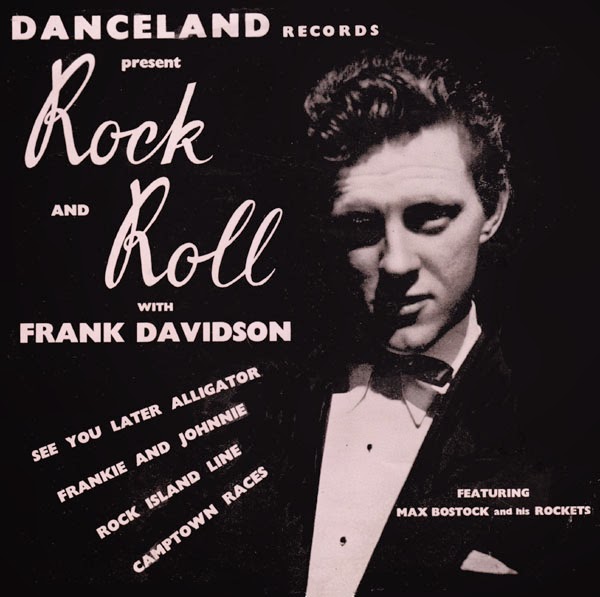
Frankie Davidson - Rock And Roll


See You Later Alligator/Rock Island Line/Camptown Races/Frankie And Johnnie


Born on January 12, 1934 in Melbourne, Australia.

From 1962 on, he released numerous comedy singles in Australia, such as ‘50 Million Blowflies Can’t Be Wrong’, and has recorded at least twenty albums.

In 1963, he toured with Cliff Richard, Helen Shapiro and Fabian.

Frankie Davidson, has been entertaining Australians and overseas audiences since the heady days of Bandstand and six o'clock rock. His career now embraces five generations. He has been nominated for the "MO' awards entertainer for the year in 1976 and 1979.

He was chosen by his peers as "Australia's most versatile performer - as a tribute to his staying power. He was nominated for "Best Male Cabaret Vocalist" in 1992 and 1993.

Frankie is also an accomplished actor: with many appearances in T.V. Soaps and Dramas. He has also presented for T.V. Campaigns - Soccer Pools, Mazdas' Mr Right and Caltex Oils.

Some of his film credits include: 'Last Frontier', 'Muriels Wedding', 'All Saints' and 'Farscape'.

In January 1987, Frankie received the prestigious 'Advance Australia Award" for his services to the music and entertainment industry.

In the entertainment World, Frankie Davidson is not only a true professional in every sense of the word but more importantly a real Australian Entertainment Legend.

Have you ever been to see King’s Cross? Reached No.8 in 1962 ,Frankie had 7 other novelty songs in the top 40.

Have you ever been to see Old London Town?, Ball bearing Bird, Gimmie dat Ding, I hope your chooks turn into Emus, 50,00000 blowflies can't be wrong, The Aussie Barbeque Song, Hector the trash collector and We love the Beatles.


Wednesday, 18 February 2015

Moonshine Jug And String Band - 1973 - Keep You On The Move


 Keep You On The Move (single mix)/ Keep You On The Move/Mad Mandy/On The Road Again/Tell My Friends


 John Brewster kicked off what eventually became The Angels four decades ago, in Adelaide 1970, when he asked his brother Rick if he wanted to play with him in a band. The Moonshine Jug & String Band was born. Doc Neeson joined the jug band a year later and Moonshine became one of Adelaide’s most successful bands, selling out residencies week after week and playing big festivals and concerts. John wrote a song in 1973 called ‘Keep you on the Move’ which peaked at number 4 on the Adelaide radio charts. It was a rock song recorded by a jug band. John, Rick and Doc realised that they had to change direction and so the band evolved into The Keystone Angels in 1974.  An appearance at the 1975 Sunbury Pop Festival resulted in touring Australia with Chuck Berry and, later that year, with AC/DC who liked the band so much they introduced them to Harry Vanda and George Young in Sydney. The Angels then signed to Alberts and went on to huge success, both in Australia and, in the 80s, in the US, Canada, England and Europe

Saturday, 17 January 2015

Frog Hollow - Over Under Sideways Down


Theme From Over Under Sideways Down/Slowish One/Sun God/Brown Shoes


 Frog Hollow were a band from  Sydney way back in the early seveties, they played dances at the Catholic School hall at Kingsgrove regularly. They recorded this EP  for the soundtrack to the surf movie "Over Under Sideways Down".

Monday, 12 January 2015

Normie Rowe - New Four


Could It Be/Funny Bone/I Live in the Sunshine/Far Beyond The Call Of Duty


 Normie Rowe's career began in 1964 when he was spotted performing by radio personality Stan Rofe who arranged for him to appear at Melbourne dances and discos backed by instrumental groups like The Thunderbirds, The Impostors and finally The Playboys, who became his permanent band until 1967. Signing with Brisbane-based independent label Sunshine, Rowe released his first single Gershwin's “It Ain't Necessarily So” in April 1965. Rowe recorded a number of successful ballads and pop songs throughout 1965, including Que Sera Sera” (1965), “I Who Have Nothing” (1965), “Tell Him I'm Not Home” (1965), and “Shakin' All Over” (1965), fostering his image as the epitome of the clean-cut pop idol of the mid-1960s.

In mid-1965 he joined the Easybeats, Bobby and Laurie and M.P.D. Ltd on “The Big Four” national tour playing to huge crowds around the country. In August 1966 Rowe travelled to the UK to further his career. He recorded four new singles with producers Trevor Kennedy and John Carter and toured extensively with performers such as Julie Driscoll, The Spencer Davis Group, Brian Auger and The Trinity, Gene Pitney and The Troggs. In March 1967 he toured the UK with The Playboys. Together they also toured North America in support of Roy Orbison and represented Australia at Expo '67 in Montreal.


In September 1967 Rowe received a call-up for compulsory military service. The following two years included active service in Vietnam with the A Squadron, 3rd Cavalry Regiment, which dramatically curtailed his music career. Returning to the music industry in 1970 he released “Hello” which was penned by Johnny Young. Johnny had written about five hits in a row: “The Star”, “The Real Thing”, “I Thank You”, “Smiley” and “Hello”. It was revealed many years later that Young's song "Smiley", a major hit for Ronnie Burns in 1969, was written about Normie. The “Hello” album marked the end of Normie’s Sunshine contract, although the label had been taken over by Festival several years earlier after it got into financial problems. Normie signed to Festival in 1971, and on March 6 he married his girlfriend Sue Powlesland.


Sunday, 11 January 2015

Johnny O'keefe - Don't Be Cruel


Don't Be Cruel/I Want You To Want Me/Tell Her/Do You Love Me


John Michael (Johnny) O'Keefe (1935-1978), rock'n'roll singer, was born on 19 January 1935 in Sydney, second of three children of Raymond Moran O'Keefe, furniture salesman, and his wife Thelma Edna, née Kennedy, both born in New South Wales. Johnny attended Christian Brothers' College, Waverley, and completed a first-year certificate at the College of Retailing. His father occasionally played in a jazz band. While at school Johnny sang in the choir and studied piano. He began to imitate the emotional singing style of the American pop idol, Johnnie Ray, and appeared on radio 2UW's 'Australian Amateur Hour'.

While working as a salesman in his father's furniture store, R. M. O'Keefe & Co., Pitt Street, O'Keefe enrolled in economics at the University of Sydney. After he heard Bill Haley singing Rock Around the Clock in the film Blackboard Jungle in 1955, he decided to become a rock'n'roller. In September 1956 he and Dave Owens formed the 'Dee Jays' (Dee was for Dave, and Jay for Johnny). They were joined by Johnny Greenan, Lou Casch, Keith Williams and Johnny 'Catfish' Purser. The band began performing at Stones Cabaret, Coogee. By early 1957 they were playing at four dances a week (at Chatswood, Coogee, Balmain and Petersham) and also appearing on Saturdays in the interval between feature films at the Embassy Theatre, Manly.

After signing with Festival Records Pty Ltd, O'Keefe and the 'Dee Jays' released You Hit the Wrong Note Billy Goat, written by Haley, in July 1957. Their second record was Am I Blue?, with Love Letters in the Sand on the 'flip side'. In October they performed in one of Lee Gordon's 'Big Shows' at the Stadium with American stars 'Little Richard', Gene Vincent and Eddie Cochran. Five months later O'Keefe released Wild One, which he wrote with Owens, Greenan and Tony Withers, a disc jockey; the song was an immediate hit and made him the first Australian rock'n'roller to reach the national charts. Shout followed in 1959 and She's My Baby in 1960.

Stockily built and 5 ft 7½ ins (172 cm) tall, O'Keefe looked more like a boxer than a singer. Although his appearance was not striking and his vocal talents were unexceptional, most commentators agreed that he had 'presence'. On stage he traded, in part, on an overt sexuality and handled the microphone in a suggestive manner. He once remarked: 'It didn't matter how you sang the song; it mattered what you did'. Despite his image as 'The Wild One', he promoted rock'n'roll as wholesome entertainment, claiming that it was one of 'the greatest barriers to delinquency'. Like most stars of that period, he aspired to be an 'all-round entertainer'; two of his biggest hits were the ballads, I'm Counting on You (1961) and She Wears My Ring (1964).

At St Therese's Catholic Church, Dover Heights, on 2 August 1958 O'Keefe had married Marianne Renate Willinzik, a 23-year-old hairdresser; they were to have three children before she divorced him in 1966. The marriage felt the strain of his frenetic lifestyle and ambitions. O'Keefe left the family business in 1958. Joining Lee Gordon's record company, he worked as an artist and repertoire man. He recruited singers for the Leedon label, including 'Lonnie Lee', Barry Stanton and 'The Crescents', and wrote songs for them. From 28 February 1959 he and the 'Dee Jays' starred on the Australian Broadcasting Commission's Saturday evening television show, 'Six O'Clock Rock'. O'Keefe soon became the compere, and was closely involved in the show's production. By the beginning of 1960 he also hosted an A.B.C. radio programme, the 'Johnny O'Keefe Show, Rockville Junction', which was broadcast on Friday nights.

O'Keefe regarded success in the United States of America as the ultimate accolade. In November 1959 he had visited America and signed with Liberty Records. Next year he toured thirty-five States and appeared on the television programme, 'American Bandstand', but his reception was far from the triumph he wanted and he returned to Australia. On 27 June 1960 he was involved in a serious motorcar accident on the Pacific Highway near Kempsey. He received sixty-four stitches in his head and another twenty-six in his hands. After only seven weeks he again compered 'Six O'Clock Rock'. In 1961 he hosted the 'Johnny O'Keefe Show' on ATN-7.

That year O'Keefe made another unsuccessful American tour. He flew to London, where he suffered a nervous breakdown. In August 1962 he suffered a further breakdown and spent two months in a psychiatric ward at Royal Prince Alfred Hospital, Sydney. He returned to his television show—renamed 'Sing, Sing, Sing' during his absence—in February 1963, but it ceased production in 1965. Exceptionally energetic and often charming, O'Keefe was subject to dramatic changes of mood and had a tendency to overreact. In November 1964 he was back in hospital, his 'holiday camp' as he jokingly called it.

The rise of 'Mersey beat' music signalled a change in O'Keefe's fortunes. He called 1964, the year in which 'The Beatles' toured Australia, the 'biggest downer of his career'. The production and sale of his records declined. Following a brief return to television in 1967 as host of 'Where the Action Is', he found work largely in tent-shows and at leagues clubs. In 1974 his career underwent something of a resurgence. His show, The Good Old Days of Rock'n'Roll, opened at the St George Leagues Club in August that year and continued on tour until his death. His song, Mockingbird, recorded with Margaret McLaren, became a hit. On 14 February 1975 (St Valentine's Day) at the Masonic Hall, Waverley, he married with Methodist forms Maureen Joan Maricic, a 29-year-old fashion consultant and a divorcee. They opened a boutique, J. O'K Creations, at Paddington in 1978.

The highs and lows of O'Keefe's life appeared extreme. Apart from numerous breakdowns, he had some run-ins with the police for driving offences and minor drug charges. Generous by nature, he helped to raise funds for the Spastic Centre of New South Wales and the Margaret Reid Orthopaedic Hospital, St Ives. He entertained Australian troops in Vietnam in 1969 and performed at a free concert in cyclone-devastated Darwin in 1975.

After taking pills at his Double Bay home, O'Keefe died of barbiturate poisoning on 6 October 1978 at St Vincent's Hospital, Darlinghurst, and was buried with Catholic rites in Northern Suburbs cemetery. His wife survived him, as did the daughter and two sons of his first marriage. The Australian Variety Artists Association named an award after him. In 1988 his name was included in the Australian Record Industry Association's hall of fame.

Monday, 5 January 2015

Warren Williams - A Star Fell From Heaven


A Star Fell From Heaven/Why Do They Doubt Our Love/Beautiful As You/Look Out It's Me


Warren Williams is a rock musician from Australia. In the 1950s, he was a pioneer of Australian rock music, forming the group Warren Williams and the Squares. Williams was a prolific songwriter.

A former child soprano, Williams formed Warren Williams and the Squares in January 1958, after the tradition of Bill Haley and His Comets. The group released their debut single "My Teenage Love" in December 1959 and "Kath-a-Leen" in April 1960. By the end of 1960, Williams left the Squares. His first single of his solo career was "My Little Girl", released at the end of 1960.

Warren Williams and the Squares made their first television appearance on Six O'Clock Rock the Johnny O'Keefe-hosted television show in July 1959. He was voted the sixth most popular artist on Six O'Clock Rock. starred on the popular music TV show Bandstand in the 1950s and 1960s.

Williams signed with the Leedon label in 1961 and released several singles, e.g. "A Star Fell From Heaven". This song reached the lower top 20 in 1961 in several Australian states. He went on to form his own publishing company, Williams-Conde Music Pty Ltd., with Franz Conde. Williams joined the Courtmen in March 1964. The Courtmen backed him on his song "It's Party Time".

In 1964, Beatlemania swept Australia. Williams' popularity began to lag with the rise of pop music. Williams took to performing in clubs and cabaret shows, and then the nostalgia circuit.

Warren Williams has four children, Andrew, Warren Jr., Darren, and Tracy. Andrew and Warren Jr. are popular performers in Sydney, Australia.

Wednesday, 31 December 2014

Johnny O'keefe - Lets Go Lets Go Lets Go


Let's Go, Let's Go, Let's Go/Shout Shout/Shake Shake Shake/I Like It


John Michael O'Keefe, known as Johnny O'Keefe (19 January 1935 – 6 October 1978), was an Australian rock and roll singer whose career began in the 1950s. Some of his hits include "Wild One" (1958), "Shout!" and "She's My Baby". In his twenty-year career, O'Keefe released over fifty singles, 50 EPs and 100 albums.

Often referred to by his initials "J.O.K." or by his nickname "The Wild One", O'Keefe was the first Australian rock 'n' roll performer to tour the United States, and the first Australian artist to make the local Top 40 charts. and He had twenty-nine Top 40 hits in Australia between 1959 and 1974.

Thursday, 25 December 2014

Executives - It's A Happening World


It's A Happening World/Moving In A Circle/Dedicated To The One I Love/Don't You Sometimes Baby Find That I'm On Your Mind


Like  Allusions, and The Affair, not enough recognition has been accorded to The Executives. They shared with those bands a polished, musicianly approach, although they fared considerably better than most of their contemporaries in the longevity stakes. They were also quite successful in commercial terms -- they scored several Top 40 hits, including two consecutive Top 5 singles in Sydney, and they were widely regarded as being Australia's most sophisticated pop group. They are also notable as one of the very first Australian groups to produce their own recordings.

This polished sextet was founded by husband and wife Brian and Carole King in Sydney in late 1966, quickly gaining 'must-see' status around inner-city venues. Their musical expertise and versatility was unequalled for the time, and between them the six members could play thirty-one instruments, ranging from violin to harpsichord. In January 1967 they released their debut single, "Wander Boy" backed by a cover of The Addrisi Brothers' "You're Bad". The moody, wistful a-side was highly rated by Sydney radio DJs and sold well there.

Around mid-'67 Dudley Hood, co-writer of "You're Bad", left to be replaced by guitarist Brian Patterson, who hailed originally from the Laurie Lee Ensemble (1963), then The Bluebeats (1965-66), and Tony Worsley & The Fabulous Blue Jays (1966). A second guitarist, Ray Burton (Raymond Doughty) also joined at the same time, replacing saxophonist Keith Leslie. Ray's antecedents include The Dave Bridge Quartet (1961-62) and The Telstars (1965). He had brief stints with Dynasty and The Questions in 1968 before returning to The Execs later that year. The other members of the Mark 1 line-up were virtual novices to the scene but acquitted themselves well in the professional Executives setting.

It was the one-two punch of follow-up 45s in mid-'67 that cemented The Executives' reputation. "My Aim Is To Please You" was a beautifully arranged and recorded mid-paced ballad, which displayed to excellent effect the multi-layered twinned lead vocals of Gino Cunnico (formerly lead singer of The Affair) and Carole King, together with the deft electric piano flourishes of Brian King.

An interesting piece of music 'trivia' about this song is that it was written by guitarist Kenny Young, who is best known as the co-author of the R&B classic "Under The Boardwalk". In the mid-'70s Young formed the band Fox (fronted by expatriate Aussie singer Susan Traynor aka Noosha Fox), who scored a major international hit with the song "S-S-S-Single Bed" in 1976.

Many listeners mistook the Execs' new single for an American recording, perhaps by The 5th Dimension or The Mamas & the Papas (whose styles obviously had a strong influence on The Execs) before discovering to their considerable surprise that it was a home-grown product. "Aim" became a sizeable national hit, peaking at #26 on the Go-Set chart in September. It paved the way for their biggest seller, the lush, majestic Steven Stills song "Sit Down I Think I Love You" (originally recorded by Buffalo Springfield on their debut album). It was a Top 30 hit on most capital city charts during October 1967 and was especially successful in Sydney, where it peaked at #4, and it reached #28 on the Go-Set chart in December.

During 1968 they released a trio of self-produced singles, making them one of the very first Australian bands to produce their own recordings. The first was the brisk and catchy "It's A Happening World" (March) written by Brill Building doyens Barry Mann & Cynthia Weill, which made the Top 40 in Sydney and Brisbane. The second was an irresistible slice of pure pop called "Windy Day" (June); originally recorded by US band The Lewis & Clark Expedition, it was another big success for The Executive in Sydney, where it reached #7. The third single was a glistening bauble of psych-pop whimsy, "Summerhill Road" (December), co-written by Ray Burton and Garry Paige, as was the single's flipside, "Christopher Robin".

Garry Paige has a very interesting history -- while visiting the U.S. ca. 1967 he became friends with guitarists Steve Cropper of Booker T. & The MGs and Erik Braunn of Iron Butterfly. Paige owned a Vox wah-wah pedal and this novel device caught the attention of Braunn, who was so enamoured with it that he bought it from Paige and used it extensively on their famous LP In-A-Gadda-Da-Vida.

Paige subsequently wrote with Russell Dunlop of Aesop's Fables and Flake, and enjoyed a long and successful partnership with Mark Punch, with whom he co-wrote the Renee Geyer hits "Heading in the Right Direction" and "Words Are Not Enough". In 1979 he teamed up with Kevin Borich for his Angel's Hand LP and he has since worked with Anne Kirkpatrick, Kim Hart and David Briggs of LRB.

All of the above-mentioned Execcs Singles were respectable national sellers. Around this time The Execs cut a track for a various-artists promo EP for the Coca-Cola company, which is now extremely rare. The uncredited liner notes, couched in the hip vernacular of the day, make for amusing reading 30-odd years on:

"They're the top group in New South Wales, and with "Windy Day" a bullet performer everywhere it's played, they look like staying that way. Their new jingle for Coca-Cola and their latest single ("Summerhill Road"), featured on the flip side of this disc which was written and produced by themselves will really knock you out!"

Shortly after the early-1968 release of their eponymous debut LP, The Executives made the first of two forays to the USA, where they attracted encouraging industry scrutiny. They signed to the Buddha label and with the management team of DiBlasio, Wald & Day whose client list included Billy Joel, Helen Reddy and Tiny Tim (partner Jeff Wald was the husband of Helen Reddy). Unfortunately nothing came of the Buddah deal, so they eventually returned to Australia.

But their absence did little to diminish their popularity in their homeland, where a further bunch of singles, EPs and another album fared well on the charts, and they remained a popular live draw. Their second album, On Bandstand, gathered many of their earlier hits, supported by a selection of well-chosen covers of contemporary standards, including several tracks from the hit musical Hair, and the LP confidently showcased the abundant musical strengths of the band. This collection has been  re-released in various forms subsequently (see Discography).

A second trip to America in late 1969 saw them absorbing the prevailing psychedelic-progressive trends; falling" into line with that maxim, they changed their name to The Inner Sense, adopting a heavier musical style but still retaining their trademark vocal polish. The Mark 1 line-up of the group lasted until late 1969. Unfortunately, new trends in progressive and heavy rock were making the smooth, breezy pop stylings of The Exectuives a thing of the past, and they were tagged as a "middle of the road" band in later years.

Most of the group returned to Australia, and during this period Carole and Brian wrote, performed in and produced the music for the now-forgotten the stage musical Nuclear, of which former 60s pop idol Mike Furber was briefly a cast member, just before his tragic death.

Ray Burton remained in America until 1973, and it was during that time that he co-wrote the international smash hit "I Am Woman" with Helen Reddy. On his return he became an in-demand session player and went on to work in several prominent groups -- Doug Parkinson & Friends and then McGuire, Kennedy and Burton (both 1973), which evolved into Ayers Rock later that year. He also formed a duo with ex-Executive Gino Cunnico that released one album in 1974. Gino later released two obscure solo LPs and Ray released his own. Ray continues a successful songwriting and production career to this day. Among his clients are Marcia Hines, Helen Reddy and  Doug Parkinson.

Carole and Brian King formed an aptly-name new group, Transition, which kept them going until they had found the right personnel with which to resurrect The Execs in June 1974. The new lineup included vocalist Jonne Sands, a former Sunshine label artist who at one stage was touted as a successor to Normie Rowe and who scored a lone a solo hit with "Mothers And Fathers" in October 1968. He took over Gino Cunnico's original role as co-lead singer with Carole, and for three more years this line-up enjoyed solid patronage around Sydney's club and cabaret circuit, and they released three singles on Polydor. They made regular appearances on TV variety shows and also wrote and recorded the theme music for Grundy's hospital soapie The Young Doctors.

After The Executive"s folded for good in 1978, Brian and Carole King continued to team for studio sessions. Sands resumed a moderately successful solo career, mainly as a club performer. Bassist-guitarist Alan Oloman (formerly a member of legendary Lithgow band The Black Diamonds) continued with session work, contributing to Nuclear and wrote the music for the 1979 film Alison's Birthday.

The Executives left behind a body of fine records that are highly sought after by collectors of quality sixties Aussie pop, although it has to be said that they have been lamentably overlooked in terms of CD reissues. Since the closure of Festival Mushroom Records in 2005 and the sale of its archive to the Warner group there has been little action on this front, apart from the recent reissues of the Split Enz catalogue.

Nevertheless, The Executive should be remembered for their sophisticated and inventive sound, those gorgeous vocal harmonies, their accomplished musicianship and their mastery of the three-minute pop single idiom.

Original article by Paul Culnane (revised 2007)

Executives - The Executives Break Out


My Aim Is To Please You/Bad Reputation/Wander Boy/You're Bad

Executives - Parenthesis


Parenthesis/Got My Woman/Christopher Robin/Summerhill Road

Wednesday, 10 December 2014

Jimmy Hannan - Jimmy Hannan


Curly/Together Forever/Thanks/May Each Day


Jimmy Hannan (born August 1934) is a Gold Logie-winning Australian variety show host, popular singer and entertainer and game show host. One of the pioneers of television, Hannan won the 1965 Gold Logie award for Saturday Date a teen music show. Hannan's single (Beach Ball), featured The Bee Gees as backing vocalists #3 Sydney #8 Brisbane .


Saturday, 29 November 2014

Judy Stone - Born A Woman


Born A Woman/I Need You/So Softly/Lost Without You


Judy Stone popular Australian singer, a regular on the long-running TV pop show Bandstand, often on the charts in Australia from the early 60s to to the mid-70s.
Born A Woman was released in Australia 1966 and charted #3 Sydney #2 Melbourne #1 Brisbane #4 Adelaide #1 Perth


Saturday, 18 October 2014

Joy Boys - Big Four


Hindustan/Henpecked/Smokey Mokes/Walk Don't Run


The Joy Boys released several of their own singles, many of which charted, especially in Sydney where nine made the Top 40 from 1960 to 1963. They had several Top 40 entries in most of the major capital cities.

Instrumental by Col Joye's band The Joy Boys Smoky Mokes was their biggest hit #1 Sydney #10 Melbourne #2 Brisbane #1 Adelaide #26 Perth


New Link Added 30.11.2021

Wednesday, 15 October 2014

Judy Stone - I Cried


I Cried/It Takes A Lot (To Make Me Cry)/It's The Talk Of The Town/I Only Have Eyes For You


Judy Stone (born 1 January 1942) is an Australian pop and country singer from Sydney, who came to national prominence in the late 1950s through her regular TV appearances on the Australian pop music show Brian Henderson's Bandstand and her many hit records. Major national hits were '4,003,221 Tears From Now' (1964), 'Born a Woman' (1966), '(Would you Lay With Me) in a Field of Stone' (1974), 'Mare Mare Mare' (1974), 'Hasta Manana' (1976) and 'Silver Wings & Golden Rings' (1976).

As a young performer she was "by lined" as The Cowgirl from Granville but on her first appearance on "Bandstand" it was mis-announced as The Callgirl from Granville. In 1963, she recorded "It Takes a Lot (To Make Me Cry)" on which the Bee Gees (Barry, Robin and Maurice Gibb) sing backup vocals, and the song was released as a single in July.

Saturday, 11 October 2014

Playboys - Desperado


Desperado/The Mean One/Swan Lake/Camptown Races


Melbourne's Playboys started life as an Instrumental rock group back in 1964. Sunday nights at the Circle Ballroom in Preston came alive with the Playboys in residence. They became Normie Rowe's backing band from 64' to 67'. The original members were, Graham 'Trotta' Trottman on Drums, John Cartwright Rhythm Guitar, Phil Blackmore (RIP) on Keyboards, Neil McArthur Bass and Billy Billings lead Guitarist.

Johnny O'keefe - Buzz Buzz Buzz


Buzz Buzz Buzz/Where The Action Is/Billygoat/ I'm Still Alive


John Michael O'Keefe, known as Johnny O'Keefe (19 January 1935 – 6 October 1978), was an Australian rock and roll singer whose career began in the 1950s. Some of his hits include "Wild One" (1958), "Shout!" and "She's My Baby". In his twenty-year career, O'Keefe released over fifty singles, 50 EPs and 100 albums.

Often referred to by his initials "J.O.K." or by his nickname "The Wild One", O'Keefe was the first Australian rock 'n' roll performer to tour the United States, and the first Australian artist to make the local Top 40 charts. and He had twenty-nine Top 40 hits in Australia between 1959 and 1974.  New Link Added 16.08.2020


Saturday, 27 September 2014

Judy Stone - Italian Style


   Quelli Erano Giorni/Gli Occhi Miei/Dio Come, Ti Amo/Non H'leta


 Judy Stone grew up in Sydney and during her teens taught herself to play the guitar. She was heavily influenced by country and western music. In 1960, she met Col Joye and with his help she soon became a regular on Channel Nine's Bandstand. She was also touring around the country with Col and the Joy Boys. In June 1961, she signed a recording contract with Festival Records. Her first two releases were minor hits in Sydney. Her third single, I'll Step Down b/w Mommy and Daddy We're Twisting, was released in February 1962 and became her first Sydney Top 10 when it peaked at number five in March.
 Festival then released her debut album also called I'll Step Down to take advantage of her success. Stone and Joye by this stage had begun singing duets on Bandstand so it was no surprise that they teamed up to record a number of EP's and an album. Between June 1962 and July 1963 she released three more moderately successful singles before she finally broke through nationally in April 1964 with her single 4,003,221 Tears From Now, which reached the Top 10 on most charts around the country. Two more singles were issued before year-end but neither made any impact on the charts.
 In early 1965, she embarked on a two-month overseas trip to Asia and Japan with Col Joye and the Joy Boys. Her final single for the Festival label was released in September and in February 1966 she married Leo De Kroo of the De Kroo Brothers duo. She then signed up with Col Joye Enterprises' ATA Records, scoring her third Sydney Top 10 hit single in September with Born A Woman. For the rest of the Sixties she continued to consolidate her success with regular appearances on the club circuit as well as touring interstate and overseas. During this period Judy issued five unsuccessful singles for the ATA label before switching to M7 Records in 1971.
 Her first M7 single, Day by Day, made the Sydney Top 10 in November. The mid-Seventies was her most successful period in more than a decade with two Top 20 hit singles in 1974 on the M7 label and one Top 40 and one Top 20 hit single in 1976 on the Polydor Records label. Judy Stone also represented Australia at Expo '74 in the US and in the mid-1977 she travelled to the UK where she signed with recording and management company Power Exchange. She continued to perform and record into the early Eighties.

Dinah Lee - Do The Blue Beat


Do The Bluebeat/Pushing A God Thing Too Far/That's It I Quit I'll Forgive You Then Forget You


  Dinah Lee is the stage name of New Zealand-born singer, Diane Marie Jacobs , who performed 1960s pop and then adult contemporary music. Her debut single from early 1964, "Don't You Know Yockomo?", achieved No. 1 chart success in New Zealand and in the Australian cities, Brisbane and Melbourne. It was followed in September by her cover version of Jackie Wilson's, "Reet Petite", which also reached No. 1 in New Zealand and peaked at No. 6 in Melbourne.

The Australian release was a double A-sided single with "Do the Blue Beat". On her early singles she was backed by fellow New Zealanders, Max Merrit & His Meteors. Lee appeared regularly on both New Zealand and Australian TV variety programs, including Sing, Sing, Sing and Bandstand. She toured supporting Johnny O'Keefe, Ray Columbus & the Invaders and P.J. Proby. According to Australian rock music journalist, Ed Nimmervoll, in the 1960s, "Lee was the most successful female singer of in both her New Zealand homeland and Australia ... on stage and on record Dinah had all the adventure and exuberance for the time the boys had".


Do The Blue Beat single on HMV Australia, originally on Viking NZ. Also released in USA on Interphon label and in South Africa on the Troubadour label. Double-sided hit with Reet Petite. The two songs were originally released in New Zealand as A-sides of separate singles on the Viking label. The single made it to #6 Melbourne #21 Brisbane #3 Adelaide and #12 in Sydney.

Wednesday, 3 September 2014

Ronnie Burns - Coalman


Coalman/Tophat/All The King's Horses/Butterfly


Ronnie Burns' third single, "Coalman", which was released in January 1967, peaked at No. 6 on the Go Set charts. It's B-side "All The King's Horses" charted as a flipside in Sydney.

Friday, 15 August 2014

Hush - Hushpower


Get The Feelin'/Take Us Home/Maneater/White Christmas


Keith Lamb migrated to Australia in 1970 with friend Robin Jackson. In 1971 Keith formed Hush and the original line-up consisted of Keith Lamb (vocals), Chris Nolan (keyboards), Robin Jackson (guitar), Rick Lum (bass) and John Koutts (drums) Les Gock joined Hush in 1972, as did Chris Pailthorpe, replacing Robin Jackson, John Koutts and Chris Nolan. The new line-up which continued to 1976 was Keith Lamb (vocals) Les Gock (guitar) Rick Lum (bass) and Chris Pailthorpe (drums). Rick left towards the end of 1976 and was replaced by Jacque De Jong. The band split up altogether not long after.

Hush, finalist in the 1972 Hoadley’s National Battle of the Sounds was well on its way to being one of the top bands in Australia. 1973 was the beginning of Hush’s intensive national touring- playing more than 200 towns and cities, driving approximately 4,000 kilometres each week. Hush were often on tour for 9 months of the year.

The single, Get the Feeling, and album Aloud N Live were released in late 1973. Get the Feeling was a hit in NSW. In March 1974 the band signed with RCA/Wizard Records and their single “Walking became the first national hit for Hush. Robbie Porter took over production of the band’s recording and the first product of this association was the hit single “Boney Maroney an updated version of the Larry Williams rocker. Boney Maroney was number 1 in 1975. Later that year, the cover “Glad All Over was another hit for the band. #17 Sydney #6 Melbourne #5 Brisbane #7 Adelaide. Hush were regular performers on Countdown, Australia’s much-loved music show, including an unforgettable performance for first colour episode to go to air. The band with the most colourful outfits got the gig! Keith Lamb and Les Gock co-compered Countdown on several occasions.

2006 and Hush have reformed for the Countdown Spectactular Concerts performing live in Arenas all around Australia.

Thursday, 14 August 2014

Ronnie Burns - Smiley


Smiley/My Little Red Book/I'll Know What To Do/Jodie


Ronnie Burns is an Australian pop singer that first became famous in the mid-60s as the leader of popular group the Flies, who were the first long haired band in Australia and drew heavily on the Beatles. After leaving the group, Ronnie went on to become one of Australia's most popular pop singers from the mid 1960's to the mid 1970's. His song "Smiley" (#3 on the Australian charts in the winter of 1969-70), a song about a young man sent to the Vietnam war, has since become synonymous in Australia with that era and is a pop classic, while three of his other big hits - "Coalman", "Exit, Stage Right" and "All the King's Horses" - were written by the Bee Gees. His daughter, Lauren Burns, won a gold metal in Taekwondo in the 2000 Olympics. Burns currently lives with his wife in Tasmania. In 1998, they founded Appin Hall Children’s Foundation, a refuge for children with chronic illness and orphans of war.

Saturday, 9 August 2014

Johnny Young - Let It Be Me


 Let It Be Me/Cara-Lyn/Step Back/Baby (You've Got What It Takes)


After performing as supporting act to The Easybeats in early 1966, Young recorded "Step Back", which was co-written by The Easybeats' members Stevie Wright and George Young (no relation). The single was released in May 1966 as a double-A-side with his cover version of "Cara-Lyn", originally by The Strangeloves. The release peaked at number one on the Go-Set National Top 40 in November. It was one of the biggest-selling Australian singles of the 1960s, behind Normie Rowe's "Que Sera Sera"/"Shakin' All Over". In October, his EP Let It Be Me went to number four on Go-Set National Top 40.

Sunday, 27 July 2014

Rob E G - Sings Country And Western


Please Help Me I'm Falling/He'll Have To Go/Candy Man/Your Cheatin' Heart


Robert George Porter was born in 1942 and raised in Ashfield, New South Wales, a suburb of Sydney. He reluctantly took steel guitar lessons from the age of eight - he wanted to play football instead. Sydney TV show Bandstand featured hits from the UK and US played by Australian artists. As Rob E.G., Porter made his TV debut in 1959 performing the lap steel guitar instrumental "Sleep Walk" (originally by Santo & Johnny); he was soon signed to Rex Records and became a Bandstand regular. His first single, "Your Cheatin' Heart", a cover of the Hank Williams hit, appeared in February 1960. In 1961, Porter received severe spinal injuries in a car accident, he adapted his playing style and continued to record. Top ten hits in Sydney include, instrumentals "Si Senor (I Theenk)" which peaked at #1 in May 1962, "Jezabel" at #2 in May 1963, and "55 Days at Peking" at #1 in July; and the vocal single "When You're Not Near" at #7 in August 1964. Although not as popular in Melbourne, these four singles also peaked into the top ten.
On the advice of The Beatles' manager, Brian Epstein, Porter moved to the UK in 1964 where he wrote and recorded singles for Festival Records but had no chart success. During 1967 he moved to the USA and appeared in several television shows: Malibu U, Popendity, Daniel Boone, Mannix and The Immortal. In 1969 Porter co-starred in the movie Three.
In 1970, Porter was back in Australia where he purchased a controlling share of independent record label, Sparmac. He recorded three of his own singles for Sparmac before focusing on managing and promoting bands and producing records. Porter produced three of doo wop rock band Daddy Cool's LPs including their debut 1971 album, Daddy Who? Daddy Cool, which peaked at #1 and became the highest selling Australian album at the time. Other Sparmac artists included Rick Springfield and Healing Force. In 1973 Porter started a new label, Wizard in partnership with Steve Binder, with Daddy Cool and Springfield the new label also signed Hush, Mighty Kong and Marcia Hines. Porter and Binder also managed Springfield and introduced him to the US market.
He co-wrote the song "Shining" with Jill Wagner-Porter, which was recorded by Marcia Hines on her 1976 LP album Shining, and also wrote "Empty" and "A Love Story" on the that album.
In the 1980s, Porter produced albums for Air Supply, Tommy Emmanuel and The Nauts. He returned to the US to live and worked in television production and as a horse breeder. During 2006 Porter formed another record label named, Musique, with flautist Jane Rutter.

Monday, 21 July 2014

John Laws - A Lover's Question


A Lovers Question/Made To Be Loved By You/Susie Darling/Someone New


Richard John Sinclair "John" Laws, CBE (born 8 August 1935), an Australian radio presenter, sometimes known as Lawsie, was from the 1970s until his retirement in 2007, the host of a hugely successful morning radio program, which mixed music with interviews, opinion, live advertising readings and listener talkback. His distinctive voice earned him the nickname the Golden Tonsils.

Despite retiring in 2007, Laws' management confirmed in November 2010 that he would be returning to radio in February 2011, as the host of a morning programme on 2SM and the Super Radio Network.

John Laws was active musically from the fifties through to the Eighties releasing many singles and albums and a number of EP's of which this is one released in 1960. During the 70's and 80's he was known primarily for his Truckin' Albums.

Wednesday, 2 July 2014

Bruce Woodley - Friday Street Fantasy


Friday Man/Little One/Captain Crumblepeg/Little Miss Sorrow


 This 4 track E.P was released with Bruce Woodley's children book entitled 'Friday Street Fantasy'.  The book was published by Paul Hamlyn,Sydney, 1969. Aside from the party-in-an-ornamental-photo-lettering-catalog cover shown above, it's full of wonderful illustrations and mysterious music .

Basically, the story goes something like 'there was this little town called Friday Street (yes, a town called Street - just ask Bruce Woodley). It was full of sad children until one day…the "Friday Man" came to town with a rainbow in his hand!  And now everyone in town sings and plays and has fun. aaahh! a pink and orange town!
 The next song "Little One" is a lullaby, followed by a song about "Captain Grumblepeg", and his lady Mary Morningstar, who presumably lived there also. Finally, a song of hope with "Little Miss Sorrow" with her beautiful  balloons, so I'm sure she’s not sad for long.
 On the back cover, we meet Bruce, singer, songwriter and member of the seekers (a famous Australia folk group from the 60s). Apparently he was 26 when he made this album!  The creators of the colorful illustrations in the book were Paul Corley and Jeannette Spencer. (Music and review Aussie Rock From 'Rock-On-Vinyl' Blog.)